
An Overview of Mauna Kea

Mauna Kea is an inactive volcano on the Island of Hawai’i. Its peak is 13,803 ft above sea level, making it the highest point in Hawai’i and the highest mountain in the world from its base on the seafloor. Mauna Kea is a deeply sacred place that plays a central role in Native Hawaiian and Pacific Islander creation stories. This majestic mountain also encompasses a significant water aquifer for the island and shields it from hurricanes and other drastic weather conditions.

As far back as 1968, the Hawai’i State Land Board began issuing permits to construct astronomy facilities including telescopes on the summit of Mauna Kea. The University of Hawai’i was issued a lease and was tasked with the management of these conservation lands of Mauna Kea. In 2010, the Thirty Meter Telescope (TMT) was proposed to be built on Mauna Kea. Eighteen stories high and covering a surface area of 5 acres, the TMT would be one of the largest proposed telescopes in the world. The telescope is a $3.6 billion project with partners from Caltech, the University of California, Japan, India, and Canada.
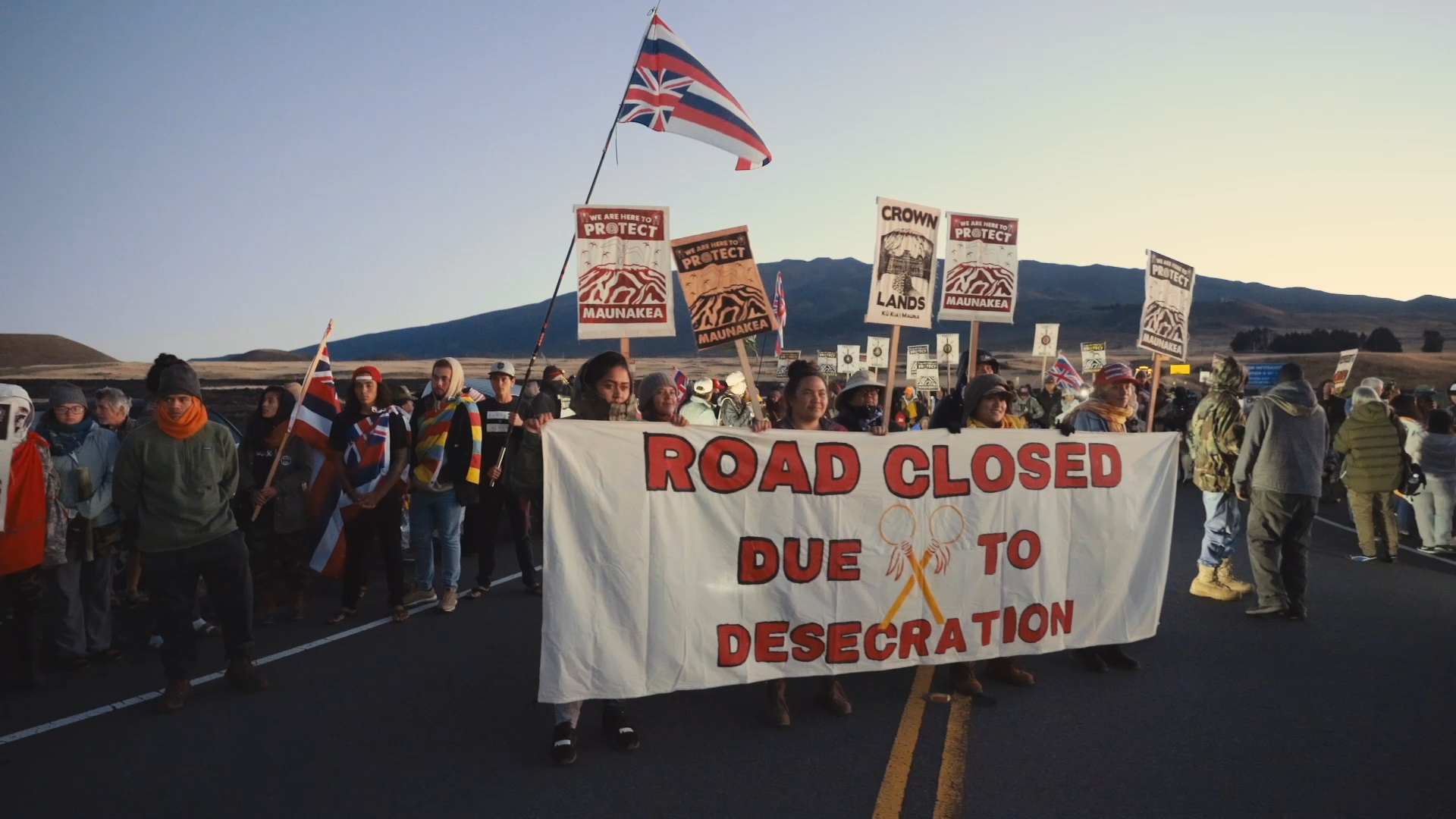
In 2014 the TMT project attempted to break ground. Instead, they were met by a grassroots resistance of hundreds of protectors led by Native Hawaiian leaders. The highly televised incidents have sparked a cultural resurgence and now tens of thousands are mobilized worldwide - similar to what was seen at Standing Rock. The protectors sustained a frontline camp physically preventing construction for 9 months until they left the mountain in March 2020.

Mauna Kea Education and Awareness (MKEA) and the movement to protect Mauna Kea continue to stand to protect Mauna Kea from the threat of TMT. Alliances have been made to stop the desecration and destruction of this sacred mountain as well as land bases, cultural practices, and traditional lifeways in Hawai’i and around the world.